

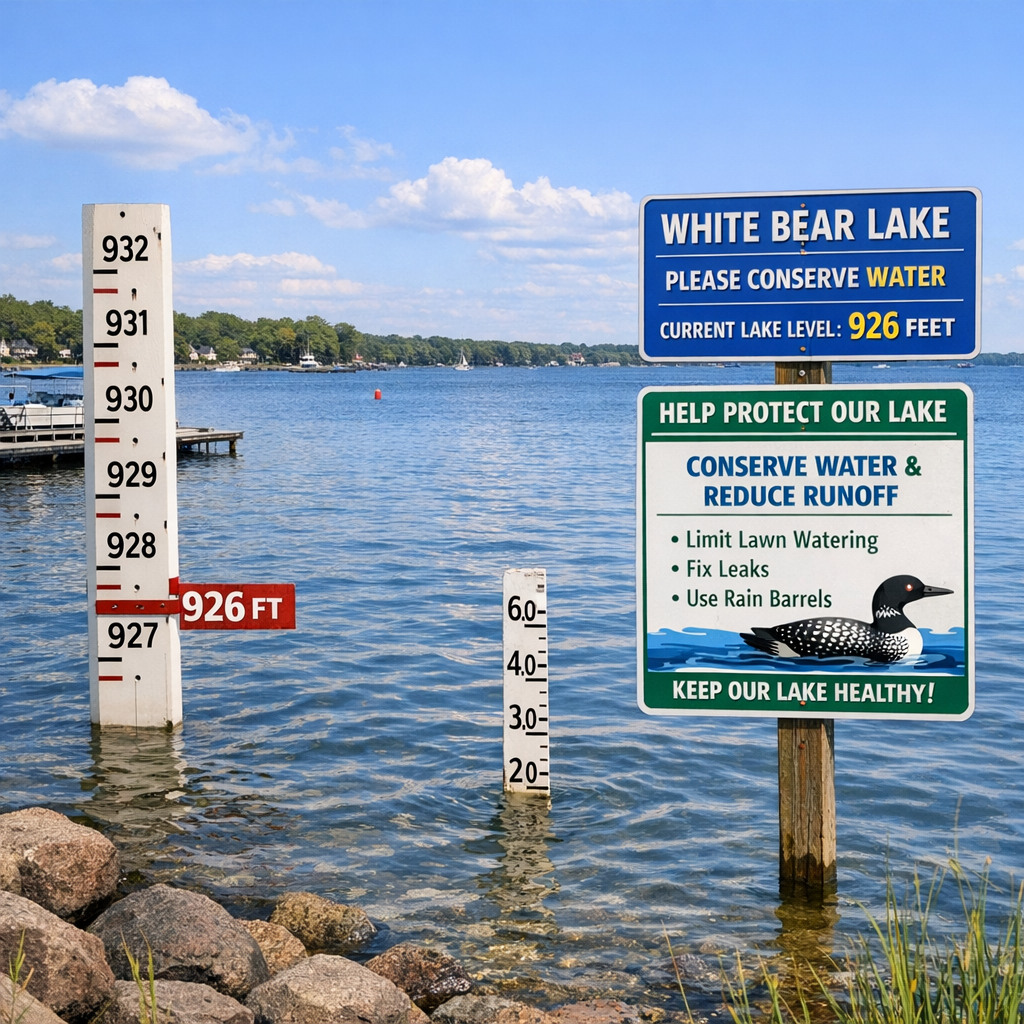
White Bear Lake, a cherished natural resource in our community, has experienced notable fluctuations in water levels over the years. These changes have prompted local authorities and residents to implement various conservation measures to preserve the lake’s health and accessibility.
Historical Water Level Fluctuations
Historically, White Bear Lake’s water levels have varied significantly, with a range of nearly eight feet between its highest and lowest recorded levels. Factors influencing these fluctuations include weather patterns, groundwater usage, and regional development. The Minnesota Department of Natural Resources (DNR) has been actively monitoring these changes to ensure the lake’s sustainability.
Conservation Initiatives
In response to these challenges, several conservation efforts have been undertaken:
Protective Elevation
In December 2016, the DNR established a protective elevation for White Bear Lake at 922.0 feet above mean sea level. This measure aims to balance ecological benefits with recreational needs, ensuring the lake remains a viable resource for both wildlife and the community.
Environmental Projects
The City of White Bear Lake has implemented projects like the Matoska Park Parking Lot Water Quality Project, which includes structures designed to prevent sediment and debris from entering the lake. Additionally, restoration efforts at the Rotary Nature Preserve focus on enhancing local habitats and promoting biodiversity.
Community Engagement
Organizations such as the White Bear Lake Conservation District (WBLCD) and the Environmental Advisory Commission play pivotal roles in lake preservation. The WBLCD, established in 1971, collaborates with various agencies to regulate activities affecting the lake and to develop programs aimed at improving water quality. The Environmental Advisory Commission advises the City Council on sustainability policies and encourages residents to adopt environmentally friendly practices.
How Residents Can Contribute
Community involvement is crucial for the success of these conservation efforts. Residents can participate by:
- Adhering to local guidelines on water usage and conservation.
- Participating in community clean-up events and educational programs.
- Implementing sustainable practices in their homes and businesses, such as reducing runoff and using native plants in landscaping.
By staying informed and engaged, we can collectively ensure that White Bear Lake remains a vibrant and healthy part of our community for generations to come.