

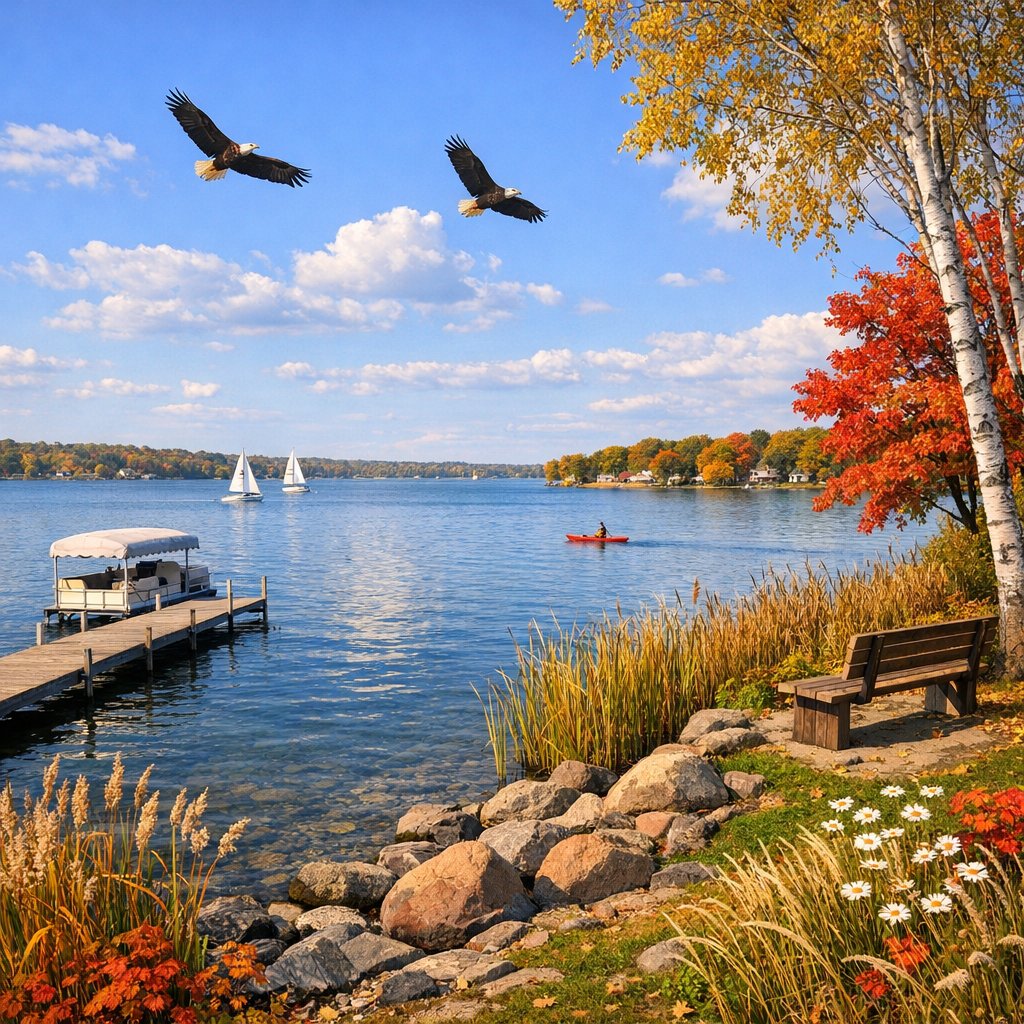
White Bear Lake, nestled in Minnesota, experiences a diverse climate characterized by distinct seasonal variations. Understanding these patterns is essential for residents and visitors alike.
Climate Overview
The region’s climate is classified as humid continental, featuring warm, wet summers and cold, snowy winters. Average temperatures range from lows of 9°F in January to highs of 82°F in July. Precipitation is fairly evenly distributed throughout the year, with May and June being the wettest months, averaging around 4.26 inches and 4.78 inches respectively.
Seasonal Highlights
Spring
Spring brings a gradual warming, with average highs reaching 55.5°F in April. This season is marked by increased rainfall, supporting the blossoming of local flora.
Summer
Summers are warm and humid, with July temperatures averaging highs of 82°F. The season is ideal for outdoor activities, though occasional thunderstorms are common.
Autumn
Autumn sees a cooling trend, with October highs averaging 57.8°F. The fall foliage provides picturesque landscapes, making it a favorite time for many.
Winter
Winters are cold and snowy, with January lows averaging 9°F. Snowfall is frequent, creating opportunities for winter sports and activities.
Environmental Considerations
White Bear Lake’s environmental health is a focal point for the community. The lake itself has been subject to fluctuating water levels, influenced by factors such as groundwater usage and climatic conditions. Studies indicate that while current groundwater use meets sustainability standards, it has contributed to lower lake levels.
Water quality is another area of attention. The city’s drinking water has been evaluated with a grade of C+, indicating fair quality. Notably, levels of certain PFAS compounds have exceeded EPA maximum contaminant levels, prompting ongoing monitoring and mitigation efforts.
Additionally, the presence of invasive species like Eurasian watermilfoil and zebra mussels in White Bear Lake poses challenges to the local ecosystem. Efforts are underway to manage and mitigate the impact of these species.
Understanding the climate and environmental dynamics of White Bear Lake is crucial for fostering a sustainable and vibrant community. Staying informed and engaged with local environmental initiatives can help ensure the preservation of this cherished locale for future generations.